
A 2019 investigation of Bombay Dyeing by market regulator Sebi has put a brake on the initial public offering process of sister company Go Air. The Wadia group-owned low cost airline had earlier planned to launch the IPO to raise Rs 3,600 crore by August, but may be forced to postpone it by a month or two as Sebi completes its investigation.

As the second wave of the Covid-19 pandemic abates, India's automakers are hopeful of a quick recovery in sales volumes, led by better rural sentiment, low interest rates, improved availability of finance and a gradual uptick in business and economic activity. In fact, companies have started to ramp up production already, encouraged by high order books and the growing preference for private transport in both rural and urban areas as a means to avoid infections. In early April, the industry had been bullish as the sales trend for March showed that the effects of the Covid-19 pandemic had been left behind. The total vehicle sales had grown by 77 per cent, albeit on a lower base, and for the past few months, sales had consistently touched 300,000 units per month.
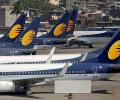
The Kalrock-Jalan consortium - new owners of Jet Airways - has got an assurance from around 30 airports that if the airline restarts operations, 170 pairs of slots can be made available. However, whether those slots will be according to the airline's demand will depend on the order of the insolvency court, which is slated to come next week. Sources said the new management feels it is extremely important that some of those slots are restored or else its business plan of operating Jet as a premium carrier will not be viable.

'The fundamentals look strong, but we will have to see if they translate into actual demand.' 'Because the April-May marriage season didn't see much sales due to the lockdown.'

Close to half a dozen more three-row premium mid-size models are expected to hit the road over the next two years.

Analysts remain sceptical on the profitability from freighter business, saying that once normal air transport resumes and there's abundant belly capacity, the traditional economics of air cargo may not be that lucrative.

However, the tender criteria demands that an entity must be eligible to conduct Beyond Visual Line of Sight operations in order to become eligible. Currently, no drone companies are eligible to do BVLOS operations, reports Arindam Majumder.
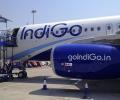
IndiGo, India's largest airline, is in talks to raise fresh funds as a second wave of pandemic has led to collapse in travel demand. The airline may look to raise Rs 3,500-4,000 crore. On Monday, only 97,761 passengers flew. With flyers cancelling bookings, airlines had to put aside flights and operated only 1,306 of them.
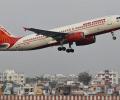
The timeline for disinvestment of Air India and Bharat Petroleum Corporation (BPCL) may be pushed by two to three months due to impact of the second Covid-19 wave. However, the government is confident of wrapping up the sale of the two companies by FY22 and meeting the disinvestment target of Rs 1.75 trillion. This will be achieved by sale of government stake in core and non-core public sector undertakings (PSUs).

According to government data, the Centre procured only 35,179 ventilators out of the 50,000 originally ordered.

The fairy tale turnaround story has, however, taken a few knocks after a second wave of the pandemic has brought a series of default notices and has posed the toughest test for the 55-year old Singh to save the airline he founded and sold to the Marans only to assume control later.
The company will utilise this time to carry out maintenance work at its manufacturing plants.
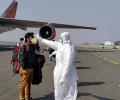
Within two weeks of many airlines deciding to roll back salary cuts encouraged by a steady increase in traffic flow, a second wave of coronavirus along with rules of compulsory RT-PCR test has hit forward bookings. The fears of last summer, when the pandemic had overturned all the wisdom of airline boardrooms, have returned to haunt the aviation industry. According to an official in the Ministry of Civil Aviation, flight occupancy is down to 60 per cent from 70 per cent in the first week of March. Airline lobby group IATA estimates that low cost airlines need to fly at 80 per cent occupancy to be profitable.
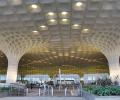
Adani Airports is planning to centre its airport business around Mumbai and Ahmedabad by developing them as gateway airports, feeding them with traffic from other airports in the company's portfolio. The Ahmedabad-based conglomerate - with investments in logistics, transportation, utilities and energy - intends to spend Rs 35,000 crore in the airport business in the next five years. This forms the bulk of the conglomerate's total capex of Rs 50,000 crore. According to a presentation given by the company in an investor call with Bank of America, gateway airports of Mumbai and Ahmedabad will be connected with the feeder airports of Lucknow, Guwahati, Trivandrum, Jaipur and Mangalore.
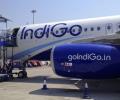
IndiGo has proposed to issue 185,000 shares worth to Chief Executive and Whole-time Director Ronojoy Dutta under the company's Employee Stock Option Plan (ESOP). The shares that can be exercised at a price of Rs 765 apiece is worth Rs 14,15,25,000. Dutta can exercise 25 per cent of that at the end of first year, 35 per cent at the end of second year, and the remaining in December 2023 when his current tenure ends.

'The government has assured us support.' 'The civil aviation ministry have told us that whatever we need, we will get prime airport slots and bilateral rights.'
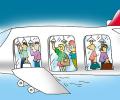
On a busy corporate route like Delhi-Mumbai, hand luggage fare can be cheaper by at least Rs 500-Rs 800.

Foreign investment firms, especially private equity, are jittery about the Indian market as uncertainty continues to shroud the energy sector.

Ruia, a chartered accountant whose business ranged from sugar to textiles and heavy engineering to tyres, refused to comment on queries about his interest in Air India.

The Army signed a $20-million deal with the Infosys-backed drone maker recently.
